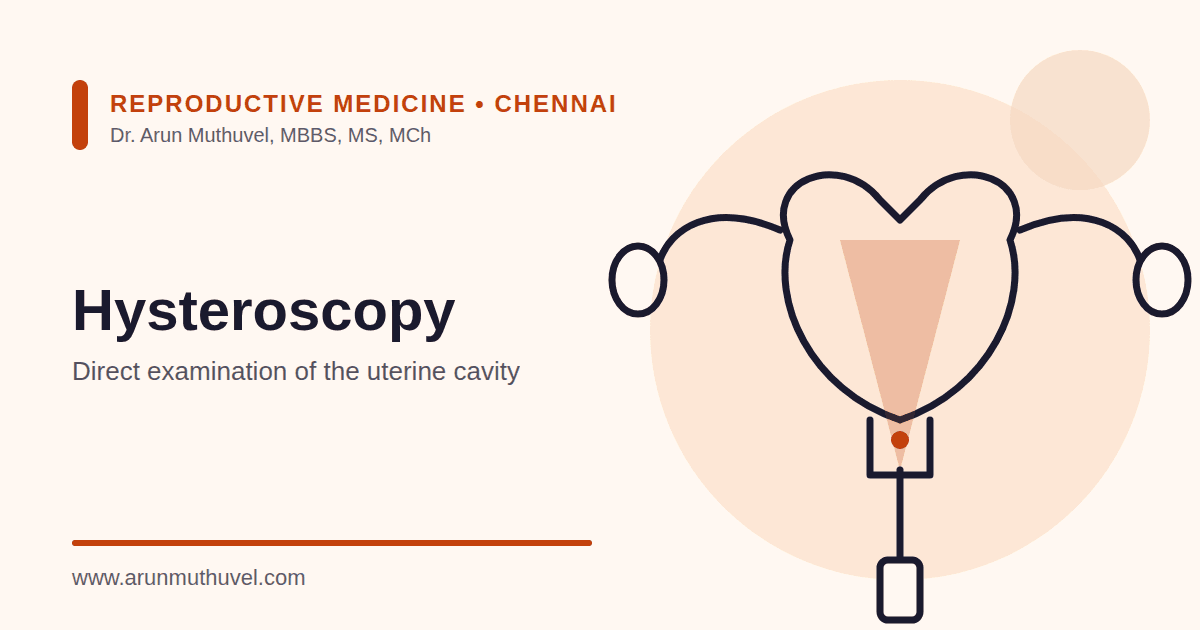
Hysteroscopy is a procedure in which a thin telescope is passed through the cervix into the uterus to view the cavity directly. It is the most accurate way to examine the lining of the uterus, and many abnormalities can be treated during the same procedure with fine instruments passed through the scope.
A healthy uterine cavity is essential for embryo implantation. Polyps, fibroids, scar tissue, and a septum can each reduce the chance of pregnancy or increase miscarriage risk. This guide explains when hysteroscopy is recommended, what it involves, and how it fits into fertility treatment.
Hysteroscopy expertise with Dr. Arun Muthuvel in Chennai
Dr. Arun Muthuvel is an MCh-qualified reproductive medicine and surgery specialist in Chennai with focused expertise in diagnostic and operative hysteroscopy. He performs hysteroscopy as part of a complete fertility assessment, so that findings are interpreted and treated with the couple’s IVF or conception plan in mind.
Precision in hysteroscopy comes from gentle technique, good visualisation, and treating only what needs treatment. Over-treatment of a normal cavity can create scarring, while missing a small polyp or septum can cost an IVF cycle. Dr. Arun Muthuvel uses hysteroscopy selectively and with fertility-preserving technique.
Diagnostic Versus Operative Hysteroscopy
Diagnostic hysteroscopy uses a very thin scope, often 3 mm or less, to look inside the uterus. It can frequently be done in the clinic without general anaesthesia and takes a few minutes.
Operative hysteroscopy uses a slightly larger scope with a working channel for scissors, graspers, a tissue-removal device, or an electrosurgical loop. It is usually done under short general anaesthesia or sedation as a day-care procedure. When a problem is expected from ultrasound, a see-and-treat approach allows diagnosis and treatment in one sitting.
When Is Hysteroscopy Recommended?
- Abnormal ultrasound findings: suspected polyp, submucosal fibroid, thickened or irregular lining, or fluid in the cavity
- Repeated IVF implantation failure: to exclude cavity abnormalities and chronic endometritis before another transfer
- Recurrent miscarriage: to identify a septum, adhesions, or other correctable uterine factors
- Abnormal uterine bleeding between periods or after intercourse
- Suspected Asherman syndrome (intrauterine adhesions) after curettage, infection, or surgery
- Retained products of conception after miscarriage or delivery
- Removal of a displaced intrauterine device or evaluation of a congenital uterine anomaly
Is Routine Hysteroscopy Needed Before Every IVF Cycle?
Large studies show that routine hysteroscopy in women with a normal ultrasound before a first IVF cycle does not improve live birth rates. It is most valuable when ultrasound is abnormal, when previous transfers have failed, or when there is a history that raises concern. Dr. Arun Muthuvel recommends hysteroscopy based on these indications rather than as a blanket step for all patients.
Conditions Treated by Operative Hysteroscopy
| Condition | Effect on fertility | Hysteroscopic treatment |
|---|---|---|
| Endometrial polyp | Can reduce implantation and cause bleeding | Polypectomy with scissors or tissue-removal device |
| Submucosal fibroid | Strongly linked to infertility and miscarriage | Myomectomy with resection loop or morcellator |
| Uterine septum | Increased miscarriage and preterm birth | Septum division (metroplasty) with scissors or energy |
| Intrauterine adhesions | Thin lining, scanty periods, implantation failure | Adhesiolysis, often with measures to prevent re-scarring |
| Retained tissue | Prevents conception, causes bleeding and infection | Targeted removal under vision |
How Hysteroscopy Is Performed
- Timing: usually in the first half of the cycle after the period ends, when the lining is thin and the view is clearest.
- Anaesthesia: none or local for diagnostic procedures; short general anaesthesia or sedation for operative procedures.
- Access: the scope is guided through the cervix using a no-touch vaginoscopic technique where possible, which avoids instruments on the cervix and reduces discomfort.
- Distension: sterile saline gently expands the cavity for a clear view.
- Inspection: the cavity walls, both tubal openings, and the cervical canal are examined systematically.
- Treatment: any abnormality is removed or corrected, and tissue is sent for histology.
A diagnostic procedure takes 5 to 10 minutes; operative procedures typically take 15 to 45 minutes depending on the findings.
Recovery After Hysteroscopy
Most women go home within a few hours. Mild cramping and light bleeding or watery discharge for a few days are normal. Normal activities can usually resume the next day, and intercourse and tampon use are avoided until bleeding stops. After septum division or adhesiolysis, oestrogen therapy or a temporary intrauterine device may be prescribed to help the lining heal.
Seek review for fever, heavy bleeding, foul-smelling discharge, or severe or worsening pain.
Risks and Limitations
- Cramping, bleeding, or vasovagal faintness during clinic procedures
- Infection (uncommon, more likely after operative procedures)
- Uterine perforation (rare, usually managed without further treatment)
- Fluid overload during longer operative procedures, prevented by careful fluid monitoring
- Formation of new adhesions after extensive resection
- Inability to complete the procedure if the cervix is very tight
Frequently Asked Questions
Is hysteroscopy painful?
Diagnostic hysteroscopy with a thin scope and vaginoscopic technique is usually well tolerated, similar to a period cramp. Operative procedures are done under anaesthesia so there is no pain during the procedure.
How soon after hysteroscopy can I start IVF or try to conceive?
After a diagnostic procedure or simple polypectomy, treatment can begin in the next cycle. After septum division or adhesion release, a healing period of one to two months and sometimes a check hysteroscopy are advised.
Can hysteroscopy detect chronic endometritis?
It can show suggestive signs such as redness, micropolyps, or swelling of the lining, and a biopsy taken during the procedure confirms the diagnosis. Treatment with antibiotics before embryo transfer can improve outcomes in confirmed cases.
Why consult Dr. Arun Muthuvel for hysteroscopy in Chennai?
His expertise combines hysteroscopic surgery with reproductive medicine, so the procedure is recommended when it genuinely helps, performed with lining-preserving technique, and followed by a clear plan for embryo transfer or natural conception.
The Bottom Line
Hysteroscopy is the most accurate way to examine and treat the uterine cavity, and correcting polyps, submucosal fibroids, a septum, or adhesions can improve the chance of pregnancy. Dr. Arun Muthuvel provides expert diagnostic and operative hysteroscopy in Chennai, integrated with IVF and fertility planning.
This article provides general medical information and does not replace individual diagnosis, consent, or surgical advice. Outcomes vary with the underlying condition, age, and clinical circumstances.